Curated by SideKickTours · Boutique local experiences in Side, Antalya
A different kind of ancient city
Why visit Side Ancient City?
Side Ancient City is worth visiting because history is part of everyday life here.
Roman ruins, the Mediterranean coast, local restaurants, and sunset walks all exist within the
same walkable old town—making Side more intimate and easier to explore than many archaeological sites in Antalya.
Roman history you can walk through
Follow the ancient streets from the Roman Theatre and Agora to the
Temple of Apollo, with archaeological landmarks naturally woven into Side Old Town.
Ancient ruins beside the sea
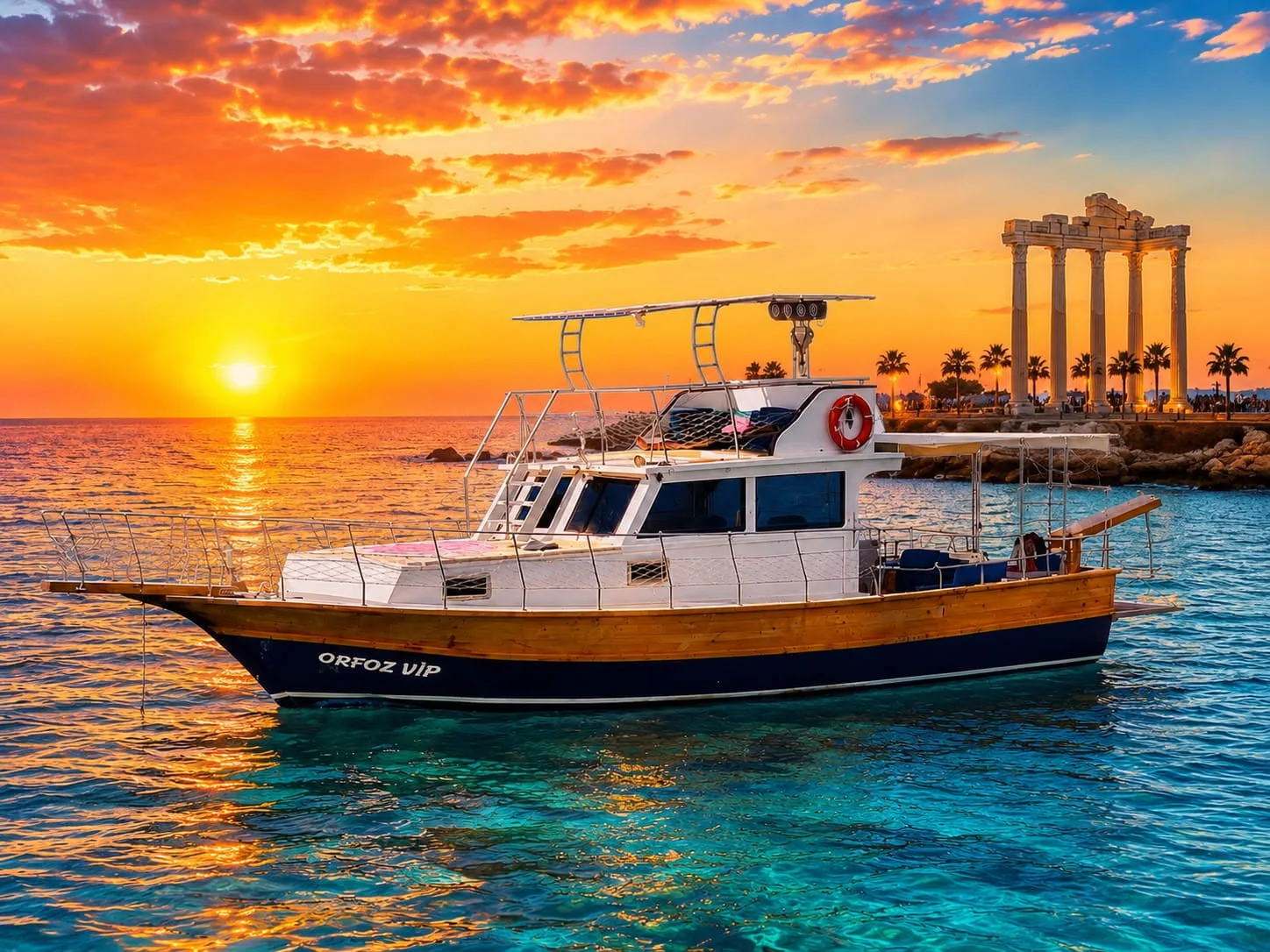
Few places combine Corinthian columns, an ancient harbour, and Mediterranean views as beautifully as Side—
especially around golden hour.
Easy to enjoy at your own pace
Side is ideal for a relaxed self-guided walk, a family outing, or a local expert-led tour that reveals
the stories behind the ruins, Pamphylia, and the surrounding Manavgat region.
Start here
The must-see places in Side Ancient City
Side’s most memorable landmarks can be explored on foot. These four highlights give you
the clearest picture of the city’s Roman past, maritime character, and Mediterranean setting.
Side Ancient City was founded in the 7th century BCE and grew into one of
Pamphylia’s most important Mediterranean ports. Its streets preserve layers of Greek, Roman,
and Byzantine history in a place that is still alive with modern Side life.
7th century BCE
Greek foundations
Side emerged on a small peninsula on the Pamphylian coast, ideally positioned for maritime
trade and cultural exchange across the eastern Mediterranean.
334 BCE onwards
Hellenistic Side
After Alexander the Great’s arrival in the region, Side entered the Hellenistic world while
retaining a distinctive local identity and its strategic harbour role.
2nd–3rd century CE
Roman golden age
Under Rome, Side flourished. The theatre, Agora, Nymphaeum, monumental gates, and temples
transformed the city into the impressive archaeological site you see today.
Byzantine period to today
From sacred city to Side Old Town
Churches and a Byzantine basilica followed the Roman era. Centuries later, the ruins became
the extraordinary historical backdrop of present-day Side and nearby Manavgat.
Plan with confidence
Essential visitor information
Side Ancient City is easy to explore independently. Use these practical details to plan
a relaxed visit around the Roman ruins, Side Museum, and the Temple of Apollo.
2026 visitor guidance · Check official notices before travel
Opening hours
The open-air ruins can be explored freely; museum-area hours change seasonally.
April–October08:30–19:30
November–March09:00–17:30
Entrance fee
The outdoor ancient city is free to visit. Entry is generally charged
only for the Side Museum area; allow approximately €10 / 540 TRY and confirm the current rate locally.
How long do you need?
Plan 2–4 hours for the main highlights. Add extra time if you want to visit
the museum, enjoy the harbour, or stay for a Temple of Apollo sunset.
Best time to visit
April–May and September–October offer comfortable walking weather.
In summer, begin early or arrive later for cooler temperatures and better sunset photography.
Side Ancient City sits on the peninsula at the heart of Side Old Town. Whether you arrive from
Antalya Airport, your hotel, Manavgat, or Alanya, the final part of the journey is easy to complete on foot.
From Antalya Airport (AYT)
The most comfortable option is a pre-booked private transfer or rental car. Shared shuttle
and bus options usually require a connection through Antalya or Manavgat.
Around 60–75 min
Approx. 65 km
From Side hotels
Hotels in Side centre are often within walking distance. From Kumköy, Evrenseki, Titreyengöl,
and Sorgun, use a taxi, local dolmuş, or a hotel-arranged transfer to the old town entrance.
5–20 min
Walk, taxi or dolmuş
From Manavgat, Alanya & Belek
Manavgat is the nearest transport hub, with frequent local connections. From Alanya or Belek,
a private transfer or organised day trip is usually the simplest option for a stress-free visit.
Manavgat: 15–20 minAlanya: 75–100 min
Public transport & final walk
Dolmuş minibuses connect Side with Manavgat and nearby resort areas. Get off near Side Old Town,
then follow the pedestrian streets toward the Roman Theatre, harbour, and Temple of Apollo.
Best for independent travellers
Travel times are approximate and can vary with traffic, hotel location, and the season.
Go beyond the photo stops with a SideKickTours experience shaped around your pace, interests,
and time in Antalya. Every route connects the ancient city with the places locals love most.
Most popular
Side Ancient City Walking Tour
A relaxed walk through the Roman Theatre, Agora, colonnaded streets, harbour, and Temple of Apollo—
brought to life with the stories behind the stones.
A flexible private guide experience for couples, families, and small groups who want deeper
historical context, a slower route, and personal recommendations.
Time your visit for Side’s most atmospheric hour, with relaxed photo stops and a local perspective
on the temple, ancient harbour, and evening life in the old town.
The best Side photos combine ancient stone, warm Mediterranean light, and sea views.
Plan your route around these five easy-to-reach photo spots, then stay for sunset near Apollo Temple.
01
Temple of Apollo columns
Frame the restored columns with the Mediterranean horizon behind them for Side’s defining postcard view.
Best at sunset
02
Ancient harbour promenade
Capture fishing boats, yachts, stone paths, and the temple silhouette in one relaxed harbour composition.
Late afternoon
03
Roman Theatre approach
Use the grand stone entrance and layered theatre architecture for strong travel portraits and detail shots.
Morning light
04
Colonnaded streets
Look for repeating pillars, long shadows, and quieter angles that show the rhythm of ancient Side.
Early morning
05
Side harbour at blue hour
Stay just after sunset for soft blue skies, warm waterfront lights, and a more atmospheric old-town scene.
Yes, Side Ancient City is a rewarding visit for families. Keep the route short,
avoid the hottest part of the day, and turn the ruins into a simple discovery game rather than a long history lesson.
The easy family route
Start near the Roman Theatre, walk through the pedestrian old town, pause around the harbour,
then finish at the Temple of Apollo. Plan around 90 minutes to two hours with snack and photo stops.
Mostly pedestrianEasy to shortenHarbour finish
Plan for sun and rest stops
Much of the archaeological area is open to the sun. Bring water, hats, sunscreen, and choose early morning
or late afternoon in summer. Cafés and harbour-side breaks are close by.
Strollers and uneven ground
The old-town paths are manageable in places, but historic stone surfaces and sections of the ruins can be uneven.
A compact stroller or baby carrier is more practical than a large pram.
Keep history simple and visual
Ask children to spot columns, theatre seats, ancient gates, boats, and temple details. It is an easy way
to turn a Side walk into a hands-on introduction to Roman life.
A visit to Side naturally ends near the harbour or old town. Choose your table based on the kind
of moment you want—sea views at sunset, a relaxed coffee break, or a traditional Turkish meal away from the busiest promenade.
For sunset
Harbour-front restaurants
Choose the harbour for seafood, Mediterranean dishes, and a view of boats and Apollo Temple.
Reserve ahead in peak season if you want a table close to the water.
Best for golden hour
For local flavour
Traditional Turkish cuisine
Step one or two streets away from the busiest waterfront for Turkish breakfast, gözleme,
grilled fish, meze, kebabs, and seasonal local dishes in a quieter setting.
Best for a relaxed meal
For a short break
Side Old Town cafés
Cafés around the old town are ideal between the Roman Theatre and harbour. Stop for Turkish coffee,
fresh juice, or a light snack before continuing your walk through the ruins.
Follow this relaxed walking route through Side Old Town. It connects the main archaeological highlights
in a natural order and finishes at the Temple of Apollo, just in time for the best harbour light.
Side Ancient City
The classic Side walking route
Around 1.5–2.5 hours at an unhurried pace, excluding museum visits and meal breaks.
01
Start: Side Old Town entrance
Park nearby or arrive by taxi or dolmuş, then enter the pedestrian area toward the ancient city.
02
Roman Theatre & Agora
Begin with Side’s monumental theatre, then continue to the Agora and the former Roman bathhouse that houses Side Museum.
03
Nymphaeum & colonnaded streets
Follow the ancient city’s street plan and look for the remains of the monumental fountain and Roman-era architectural details.
04
Ancient harbour
Pause near the water for sea views, a café break, or a harbour-side meal before continuing toward the peninsula’s edge.
05
Finish: Temple of Apollo
End at Side’s signature landmark. Arrive before sunset for the warmest light and the most atmospheric photographs.
Everything travellers commonly ask before visiting Side Ancient City—from tickets and timing
to accessibility, photography, guided tours, and visiting with children.
Is Side Ancient City free to visit?
Much of Side Ancient City is free to explore. The Temple of Apollo, harbour, old-town streets, and many outdoor ruins are open without a ticket. Separate admission may apply to the enclosed archaeological area and Side Museum.
What are the opening hours of Side Ancient City?
Outdoor areas are accessible throughout the day, while ticketed areas operate seasonally. Typical guidance is around 08:30–19:30 in summer and 09:00–17:30 in winter; always check current notices at the entrance.
How much is the entrance fee in 2026?
Reported 2026 prices vary by area: the paid ruins section is around €7, Side Museum around €5, and a combined ticket around €10. Prices and ticket rules can change, so confirm them at the gate on your visit day.
How old is Side Ancient City?
Side was founded in the 7th century BCE, making it approximately 2,700 years old. The most visible theatre, temples, baths, and gates mostly date from its prosperous Roman period.
Who built the Temple of Apollo in Side?
The Temple of Apollo was built during Side’s Roman golden age, around the 2nd century CE and traditionally associated with the era of Emperor Antoninus Pius. Its famous restored columns stand beside the ancient harbour.
How long do you need to visit Side Ancient City?
Allow 2–4 hours for a comfortable visit. A shorter walk can cover the Roman Theatre, harbour, and Apollo Temple, while a slower visit includes Side Museum, cafés, photography, and sunset by the sea.
Is Side Ancient City wheelchair accessible?
Accessibility is partial. Main pedestrian routes and the harbour area are relatively level, but ancient paving is uneven. The Roman Theatre has steep stone steps, so wheelchair users and families with strollers may need assistance or an adapted route.
What is the best time to visit Side Ancient City?
For comfortable weather, choose April–May or September–October. In summer, visit early morning for cooler paths or arrive late afternoon and finish at Apollo Temple for the best golden-hour light.
Can you visit Side Ancient City at night?
You can walk around the open old town and see Apollo Temple after dark. Access to ticketed archaeological areas, however, depends on seasonal schedules and any separate evening-opening arrangements, so verify locally before planning a night visit.
Is Side worth visiting compared with Perge and Aspendos?
Yes—Side is the best choice for ruins combined with sea views and old-town atmosphere. Perge is more expansive, Aspendos has the standout theatre, and Side offers the easiest blend of Roman history, harbour dining, and sunset scenery.
Are guided tours available in English?
Yes. Guided Side experiences are commonly available in English, and private options may also be available in German or Russian. A local guide helps explain the theatre, Agora, harbour, and temples where on-site interpretation is limited.
What should I wear when visiting Side Ancient City?
Wear comfortable walking shoes with grip, light sun-protective clothing, and a hat. Bring water and sunscreen, especially from June to September. Ancient stone paths can be uneven, so sandals with poor support are not ideal for a longer route.
Is there parking near Side Ancient City?
Yes, paid parking is available near the old-town entrance and harbour area. Vehicle access within the pedestrian archaeological peninsula is limited, and spaces can fill quickly in summer—particularly close to sunset.
Can you take photos in Side Ancient City?
Yes, outdoor photography is one of the main reasons to visit. The best shots are around the Temple of Apollo, ancient harbour, Roman Theatre approach, and colonnaded streets. Follow any posted restrictions inside the museum.
What is the connection between Side and Cleopatra?
Stories connecting Cleopatra and Mark Antony with Side are popular locally, but the strongest historical links concern the wider eastern Mediterranean world. Treat the tale as romantic local lore rather than a confirmed event at Side Ancient City.
Born and raised in Side for 40 years. With more than 15 years in tourism and
photography, I created this guide to share the real beauty of my hometown with fellow travellers and photographers.