🌴 Local tours • Private transfers • Side & Antalya
What are you looking for?
A 2nd-century Roman bath turned archaeological museum, sitting inside the ancient city of Side, Antalya. Home to over 3,300 artifacts excavated from the site itself.

Side Museum is an archaeological museum housed inside a 2nd-century Roman bath within the ancient city of Side, on Turkey’s Mediterranean coast. The building itself — known as the Agora Bath — was expanded during the 5th and 6th centuries and later converted into a museum in 1962 to display artifacts excavated from the surrounding site.
Unlike many regional museums that import collections from elsewhere, everything here was unearthed in Side itself. The objects span from the Hellenistic period through the Roman and Byzantine eras, giving visitors a focused look at the city’s own timeline rather than a broad regional mix.
After a major restoration completed in 2025, the museum reopened with improved exhibition spaces and new displays, including the first-ever joint presentation of Neo-Luwian inscriptions written in the Sidetan language — a script unique to this ancient settlement.
The museum’s 3,309 artifacts are arranged across the original Roman bath halls. Here is what visitors encounter inside.

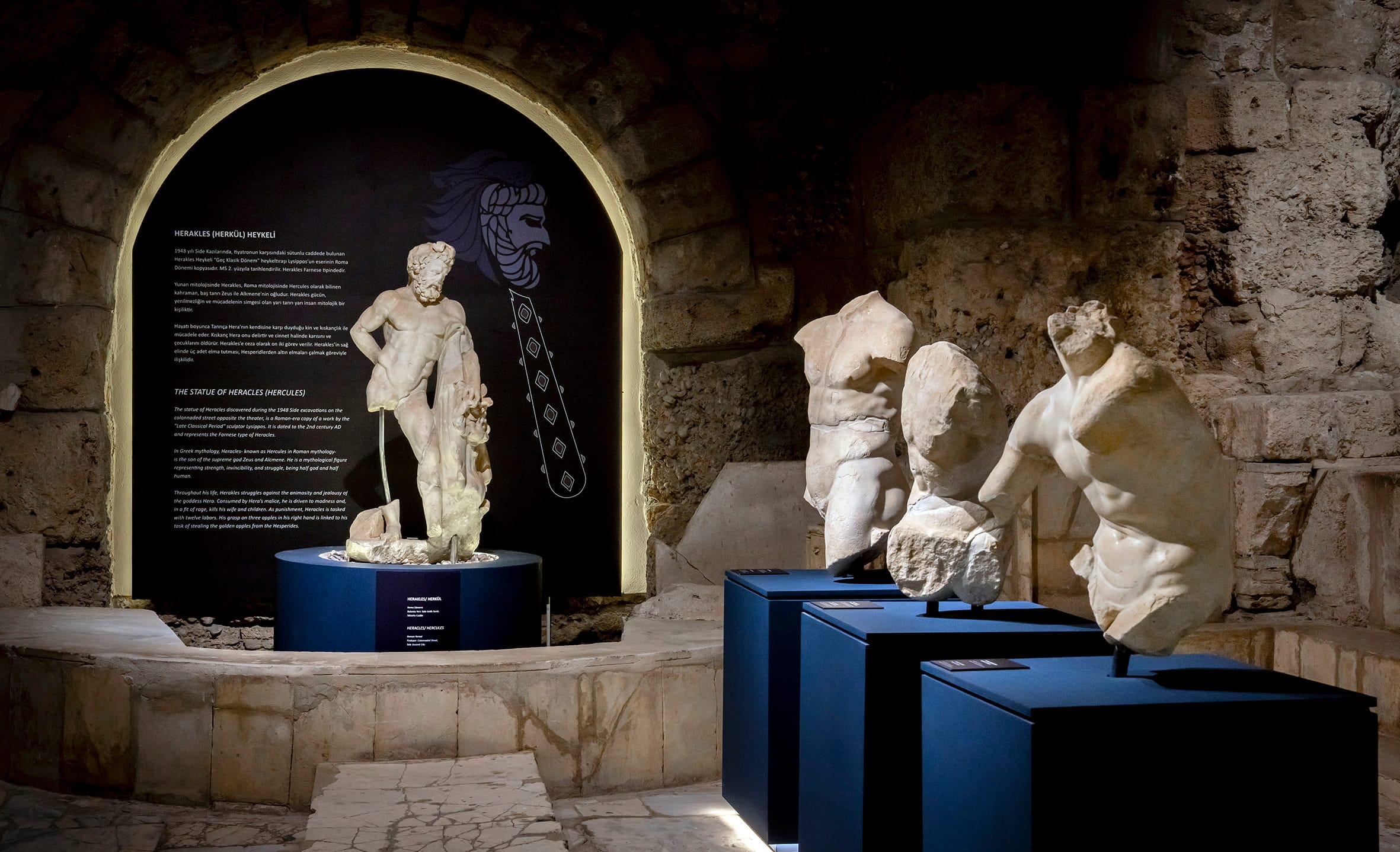
Marble statues of Hermes, Apollo, Nike, and Aphrodite recovered from the ancient city. Many were found in or near the theatre and agora.
Intricately carved stone coffins from the Roman period, some with detailed relief scenes from mythology and daily life.
Over 9,000 coins spanning from the Hellenistic era through the Byzantine period, offering a chronological map of Side’s economy.
Following the 2025 restoration, the museum now displays Neo-Luwian tablets in the Sidetan language together for the first time — a writing system found only at this site.
The original caldarium, tepidarium, and frigidarium spaces are still walkable. The architecture — with its 5th–6th century modifications — is as much the exhibit as the objects inside it.
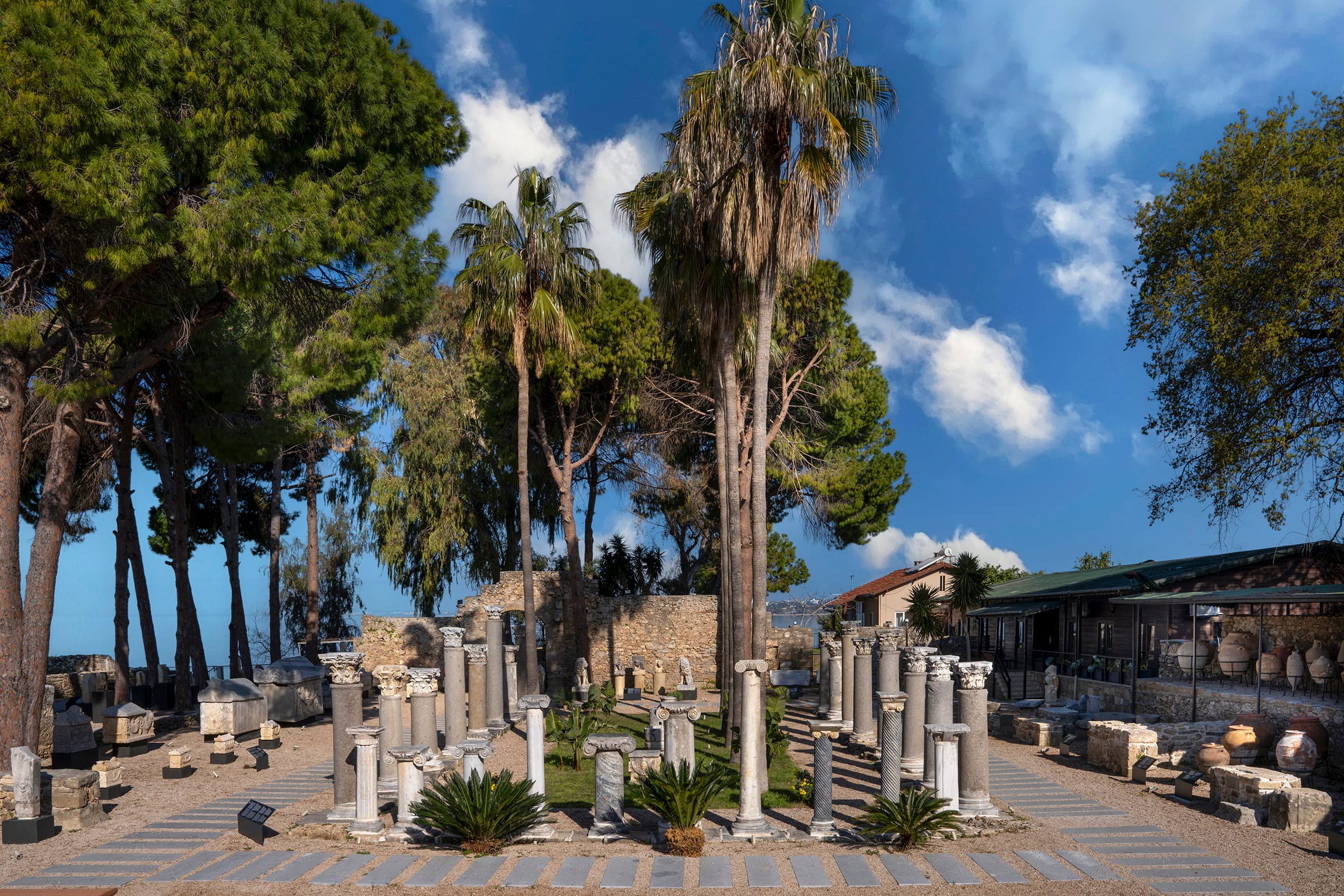
Side Museum is not a separate attraction you drive to — it sits inside the archaeological site of Side Ancient City, right next to the Ancient Theatre. The artifacts on display were excavated from the very streets, temples, and agora you walk through outside.
This makes the museum a natural midpoint in a visit to the ancient city. Rather than seeing ruins in isolation, the museum gives context: the coins were minted here, the statues once stood in these temples, and the inscriptions were carved into these walls.
Our complete guide covers the theatre, temples, harbour, and walking routes through the ruins.
Read the Side Ancient City guideLast entry is typically 45 minutes before closing. Hours may shift during public holidays.
An entrance fee applies. Pricing is set by the Turkish Ministry of Culture and Tourism and is subject to change.
The museum is inside Side Ancient City, roughly a 10-minute walk from the main entrance gate near the modern town centre.
Mornings are quieter and cooler, especially in July and August. The museum is indoors, so it also works well as a midday break from the heat while exploring the open-air ruins.
The museum building is a restored Roman bath with original stone floors and some level changes. The ancient city paths leading to it are uneven cobblestone. Comfortable walking shoes are strongly recommended.
The short answer: yes, if you are already visiting Side Ancient City. The museum adds context to the ruins and takes under an hour. Here is a breakdown by traveller type.
The Neo-Luwian inscriptions, the coin chronology, and the fact that every object was excavated on-site make this more rewarding than a generic regional museum. The Roman bath architecture is a bonus exhibit in itself.
The visit is short, indoors, and shaded — a good break from the heat between outdoor ruins. There are no interactive displays, so very young children may lose interest quickly. Best for ages 8 and up with some interest in history.
If you are doing the Ancient City anyway, the museum is a natural add-on. It helps you understand what you are looking at in the ruins. Skip it only if you are on a very tight schedule.
If you have under two hours for the entire ancient city, prioritise the theatre, Temple of Apollo, and harbour. Come back to the museum on a second visit or a slower day. It is worth seeing, but the outdoor ruins are the main draw.
You are already metres away. The museum completes the picture: you see where the statues stood, then you see the statues themselves. The extra 45 minutes is a small investment for a much fuller understanding of the site.
Side Museum is a compact, focused collection that rewards curiosity. It will not replace a major museum experience, but as a complement to the ancient city, it is one of the better site museums on Turkey’s Mediterranean coast.
Side Museum is one piece of a larger historical landscape. These pages cover the surrounding sites and experiences.